Quick Answer: Coloring pages build fine motor skills, pencil grip, focus, creativity, and hand-eye coordination in young children. Research-backed benefits include better school readiness, calmer screen-free downtime, and stronger self-expression. For best results, choose age-appropriate pages with bold outlines, print favorites repeatedly, and color together with your child regularly.
Table of Contents
- Why Are Coloring Pages Important for Child Development?
- 10 Benefits of Coloring Pages for Kids’ Development
- The Right Coloring Pages for Every Age
- How to Choose Coloring Pages That Actually Help
- 5 Mistakes Parents Make With Coloring Time
- Frequently Asked Questions
Why Are Coloring Pages Important for Child Development?
If you are a parent today, you know the guilt cycle well. You hand your toddler the tablet so you can cook dinner in peace, and then you spend the evening feeling terrible about the screen time. Here is some genuinely good news: one of the most powerful developmental tools for young children costs almost nothing, needs no batteries, and never runs out of charge — coloring pages.
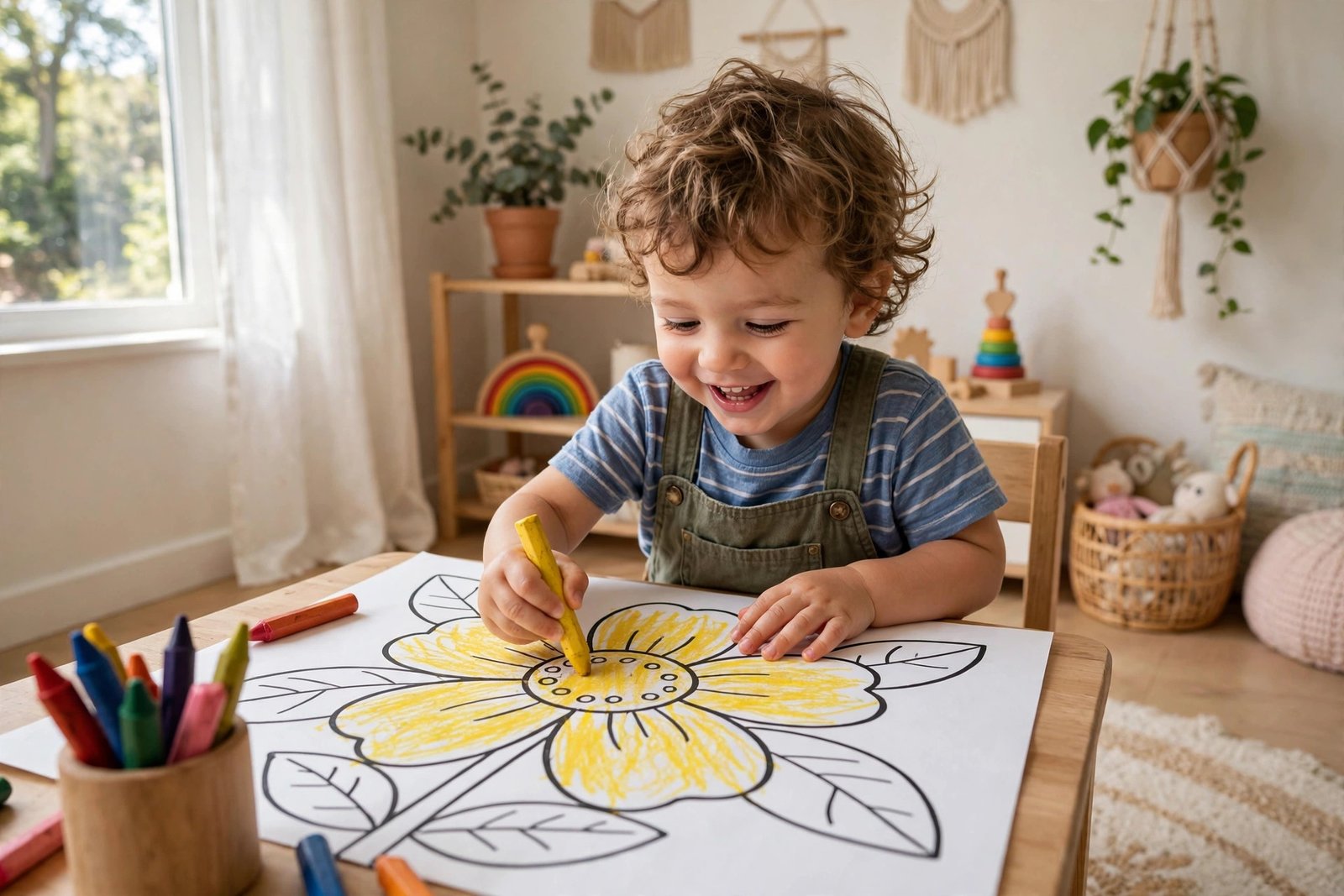
Child development experts have recommended coloring for decades, and modern research keeps confirming why. Coloring is not just a way to keep kids quiet. It is brain-building work disguised as fun. Every time your child picks up a crayon, they are training muscles, building focus, and learning to express themselves — all while having the time of their life.
The best part? You can start today. Print a page, hand over some crayons, and watch development happen.
What Are the 10 Benefits of Coloring Pages for Kids?
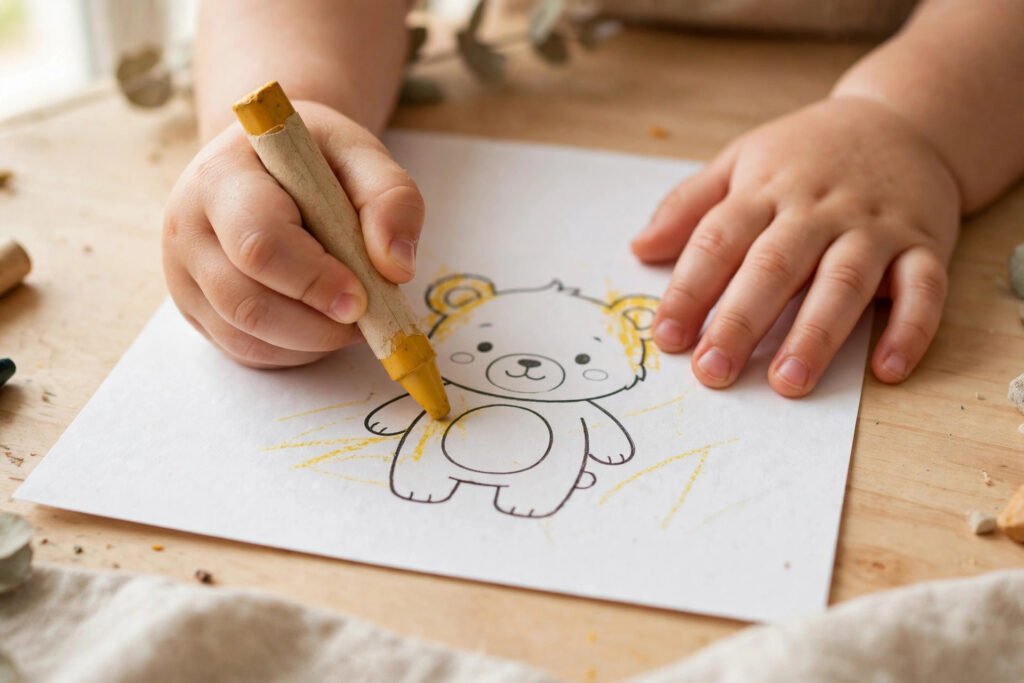
1. Builds fine motor strength: Holding a crayon, controlling its pressure, and staying near the lines strengthens the small muscles in the hands and fingers. These are the exact muscles children need later for writing, buttoning shirts, and using scissors. Pediatric occupational therapists routinely use coloring as a therapy tool for this reason.
2. Develops pencil grip naturally: Before a child can write their name, they need a comfortable tripod grip. Coloring gives them hundreds of low-pressure practice reps. No worksheets, no drills — just fun that secretly prepares them for school.
3. Boosts creativity and self-expression: A blank coloring page is an invitation. Should the elephant be gray or purple? There is no wrong answer, and that freedom matters. Young children often cannot put big feelings into words, but they can absolutely express themselves through color choices.
4. Improves focus and concentration: Finishing a coloring page requires sustained attention — a skill many kids struggle with in an age of 15-second videos. Start with simple pages that take 5 minutes, then gradually offer more detailed ones. You are literally training their attention span.
5. Teaches color recognition and vocabulary: Red, blue, “a darker blue,” turquoise — toddlers absorb color names and concepts naturally while coloring. Talk about their choices (“Ooh, you used orange for the sun!”) and you are building language at the same time.
6. Builds patience and perseverance: A detailed dinosaur page cannot be rushed. Kids learn that good things take time and that sticking with something feels rewarding. This is emotional regulation practice in disguise.
7. Strengthens hand-eye coordination: The eyes guide, the hand follows. This coordination loop is the foundation for sports, handwriting, typing, and countless daily tasks. Coloring trains it thousands of times per page.
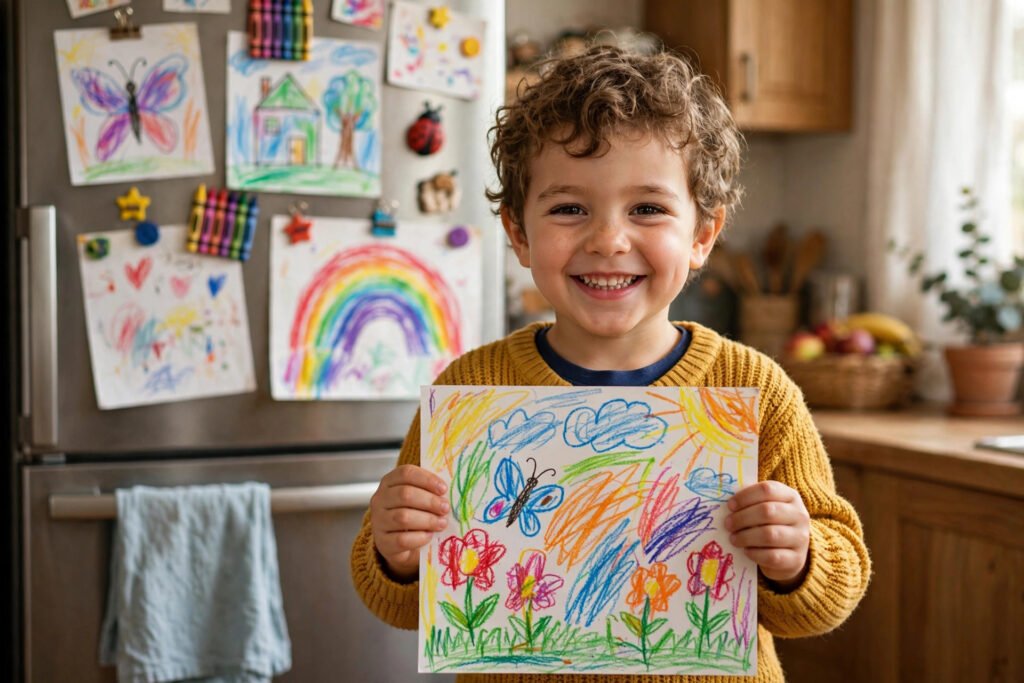
8. Gives kids a sense of achievement: Every finished page is a completed project. Hang it on the fridge, and watch your child’s chest puff up with pride. That feeling of “I made this” builds genuine self-confidence — far more than empty praise ever could.
9. Creates calm, screen-free downtime: Coloring has a meditative quality. The repetitive motion and gentle focus calm busy minds — for kids and for the parent coloring alongside them. It is the perfect wind-down activity before naps or bedtime.
10. Prepares children for school success: Put it all together: pencil grip, focus, following boundaries (staying in lines), completing tasks, and sitting still. Coloring quietly builds the exact toolkit preschool and kindergarten teachers wish every child arrived with.
Which Coloring Pages Are Right for Each Age?
Not all coloring pages suit all ages. Matching the difficulty to your child prevents frustration:
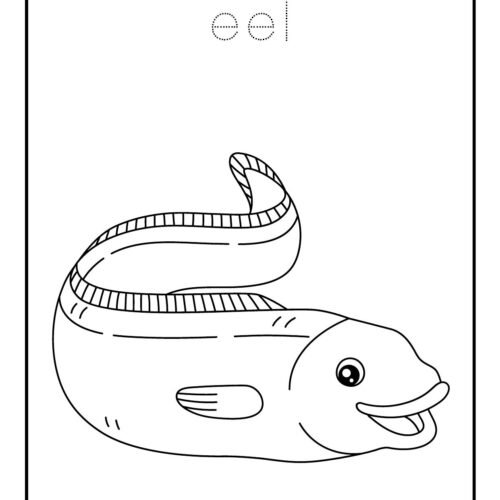
Ages 1–3 (toddlers): Big, simple shapes with thick outlines — think large animals, balls, and suns. Thick crayons are easier to grip than skinny ones.
Ages 3–5 (preschoolers): Simple scenes with familiar objects — animals, vehicles, alphabet letters. This is the golden age of coloring enthusiasm.
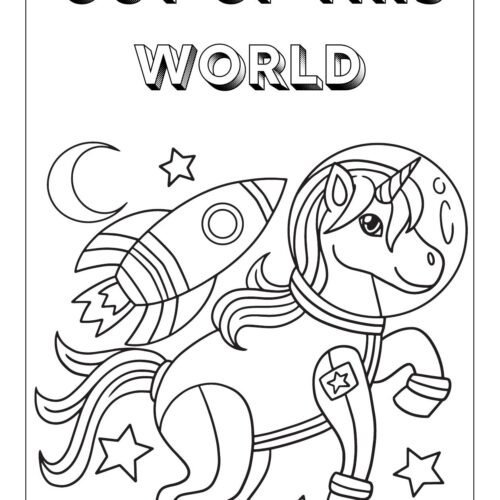
Ages 5–8 (early school): More detailed pages — dinosaurs, unicorns, mandalas, scenes with backgrounds. These build the patience and precision older kids need.
How to Choose Coloring Pages That Actually Help
With millions of free pages online, quality varies wildly. Look for:
Clear, bold outlines — faint gray lines frustrate small hands.
Age-appropriate detail — too simple bores them, too complex overwhelms them.
Themes your child loves — a dinosaur-obsessed kid will color for an hour; a boring page lasts two minutes.
Variety — mix animals, letters, numbers, and scenes to build different skills.
Printable packs are ideal because you can reprint favorites endlessly. One download can supply months of coloring.
What Mistakes Should Parents Avoid With Coloring Time?
1. Correcting their color choices. The sky does not have to be blue. Let them explore.
2. Buying only advanced coloring books. Match the difficulty to your child’s age, or they will quit.
3. Making it a lesson. It is fine to name colors casually, but quizzing kills the joy.
4. Only coloring alone. Kids color longer and happier when a parent joins in — even for ten minutes.
5. Throwing pages away immediately. Display their work. It tells them their effort matters.
Frequently Asked Questions
Most toddlers can start scribbling around 12–15 months with chunky, non-toxic crayons. Real “coloring” with intent usually begins around age 2–3.
Printable pages win on variety and cost — you can print exactly what your child loves, as many times as they want, instead of being stuck with one book’s themes.
Follow your child’s lead. Toddlers may last 5–10 minutes; preschoolers often go 20–30 minutes when they love the page. Never force it.
Not quite. Tapping a screen does not build hand muscles or pencil grip the way real crayons on paper do. Physical coloring is superior for development.
Ready to start? Explore our printable coloring pages for kids — instant download, print at home, and color as many times as you like!