Table of Contents
- What Are Fine Motor Skills and Why Do They Matter So Much
- Why Age Three is the Golden Window for Skill Building
- How Printables Beat Out Expensive Toys
- Five Brilliant Ways to Use Printables for Little Hands
- 1. The Tracing Path Adventure
- 2. Dot Marker Masterpieces
- 3. Safe Scissor Skills Pages
- 4. Sticker Target Practice
- 5. Playdough Mats for Tactile Learning
- Overcoming Frustration and Building Confidence
- Upgrading the Environment for Success
Watching your three year old try to pick up a tiny piece of cereal is like watching a very intense game of operation. You hold your breath. They concentrate with their whole face. Finally, they get it. Those tiny movements are a massive deal in the world of child development. Your toddler is building the foundation for writing letters, tying shoes, and zipping up jackets.
If you want to help them develop these crucial abilities without turning your entire house into a permanent craft store explosion, printable worksheets are an absolute lifesaver. They are inexpensive, easy to prepare, and incredibly effective when you use them correctly.
We are going to dive deep into exactly how you can use simple sheets of paper to transform your child from a messy crayon grabber into a confident little artist ready for early writing.
What Are Fine Motor Skills and Why Do They Matter So Much
Before we jump into the activities, we need to talk about what is actually happening in your toddler’s hands. Fine motor skills involve the coordination of small muscles in the hands, fingers, and wrists working together with the eyes. When your child tracks a line on a page and moves their hand to follow it, they are performing a highly complex neurological dance called hand eye coordination.
For a three year old, mastering these movements is not just about drawing a pretty picture. It is about independence. Strong hand muscles allow them to open their own snack containers, brush their teeth, and dress themselves. Every time they pinch, squeeze, or grip, they are building physical strength and mental confidence.
Why Age Three is the Golden Window for Skill Building
Age three is a magical time for physical development. Your child is transitioning from a baby who grabs things with their whole palm to a little kid who can manipulate objects with their fingers.
Here are a few things you will notice your child starting to do around this age:
- Holding a crayon with their thumb and fingers instead of a tight fist
- Stacking a tower of blocks without knocking it over immediately
- Stringing large wooden beads onto a thick shoelace
- Turning the pages of a book one at a time instead of in large chunks
Because their brains are rapidly forming new connections, this is the perfect time to introduce structured but playful activities. Worksheets provide the exact type of focused repetition their growing brains crave.
How Printables Beat Out Expensive Toys
You could easily spend hundreds of dollars on fancy educational toys with lights and sounds. But plain printable worksheets offer unique benefits that plastic toys simply cannot match.
First, they provide a literal blank canvas for tracking progress. You can save a worksheet from January and compare it to one from June to see exactly how much their pencil control has improved. Second, they introduce the concept of working on a flat surface. This prepares them for the physical realities of a classroom environment. Finally, they are incredibly versatile. You can print them fresh every single day, meaning the novelty never wears off.
Five Brilliant Ways to Use Printables for Little Hands
Most people think a worksheet only involves a pencil. For a three year old, handing them a standard pencil is a recipe for boredom and frustration. You need to think outside the box. Here are the most effective ways to use printables to build hand strength and coordination.
1. The Tracing Path Adventure
Early writing starts with tracing paths. Look for printables that feature a clear start and end point. Maybe a dog needs to find its bone, or a rocket ship needs to reach the moon.
Instead of a pencil, give your child a thick triangular crayon. The triangular shape naturally forces their fingers into the correct grip position. Tell them to keep their crayon inside the path. Do not worry if they scribble all over the page at first. The goal is to get their eyes and hands working together to follow a specific direction.
2. Dot Marker Masterpieces
Dot markers are chunky, colorful, and incredibly fun to smash onto paper. You can find printables featuring large blank circles inside shapes or letters.
When your child holds a dot marker, they are practicing their grip strength. When they aim for the circles on the worksheet, they are perfecting their spatial awareness. Make a game out of it. Tell them to stomp the marker on the page like a dinosaur footprint. The physical resistance of pushing the marker down builds vital muscle memory.
3. Safe Scissor Skills Pages
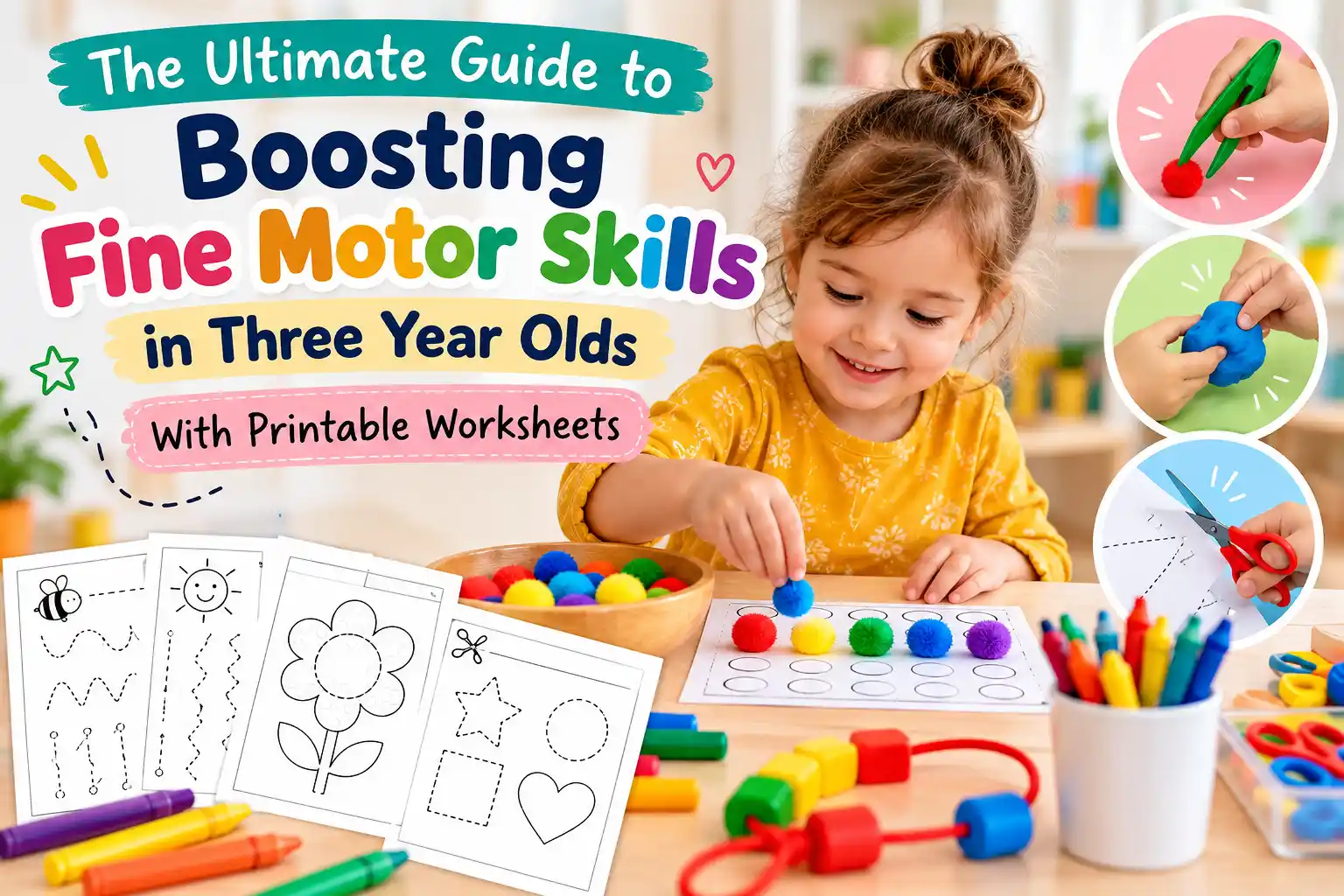
Yes, three year olds can use scissors. You just need to buy safety scissors that only cut paper. Cutting is one of the most intense fine motor workouts your child can do because it requires independent finger movements. Their thumb has to do something completely different than their other fingers.
Start with printables that have thick, straight, solid lines. Hold the paper for them at first so they can focus entirely on opening and closing the scissors. Once they master straight lines, you can print worksheets with gentle curves or zigzag patterns.
4. Sticker Target Practice
Peeling a sticker off a sheet requires an incredibly precise pincer grasp. This is the exact same grip they need to hold a pencil correctly later on.
Print out a worksheet that has specific shapes or outlines. Hand your child a sheet of small circular stickers and ask them to place one sticker inside every circle on the worksheet. If they struggle to peel the stickers, peel the very edge of the sticker up for them to give them a head start.
5. Playdough Mats for Tactile Learning
Who says printables have to be used with writing utensils? Print out worksheets featuring large, simple shapes or outlines of animals. Slip the paper inside a clear plastic sleeve.
Have your child roll playdough into long snakes or small balls and place them over the outlines on the paper. Rolling and squishing dough is phenomenal for strengthening the arches of the hands. By combining the sensory joy of playdough with the visual structure of a worksheet, you hit multiple learning centers in their brain at once.
Overcoming Frustration and Building Confidence
Toddlers are famously emotional creatures. If an activity is too hard, they will likely throw the crayon across the room and walk away. Your job is to keep the energy light and positive.
Keep worksheet sessions very short. Five to ten minutes is more than enough for a three year old. If they start getting fidgety, praise the work they have done and move on to something active. You want them to associate printables with fun and success, not pressure and boredom.
Focus heavily on the effort rather than the final result. If they try to cut a straight line and end up shredding the corner of the paper, tell them you love how hard they worked their hand muscles. Celebrate the focus in their eyes, not just the marks on the page.
Upgrading the Environment for Success
Where your child works matters just as much as what they are working on. Sitting at a giant dining table with their feet dangling in the air makes it incredibly hard to control small hand movements. Their core muscles have to work overtime just to keep them upright, leaving very little energy for finger control.
Set them up at a child sized table where their feet rest flat on the floor. Their elbows should be resting comfortably on the table surface. This grounded physical posture sends a signal of stability to their brain, allowing them to focus entirely on the worksheet in front of them.
You can also create a special box just for their worksheet tools. Fill it with dot markers, triangular crayons, safety scissors, and stickers. Let them take ownership of their supplies. When it is time to practice, they will feel a sense of pride bringing their special toolkit to the table.